
Acne Scarring Treatment in Brisbane
Specialist Assessment and Evidence-Based Management
Acne scarring can persist long after active acne has settled. Scars may affect confidence and quality of life, and they often require specialist assessment to determine the most appropriate treatment approach.
At Your Dermatologist, acne scarring management is individualised, evidence-based and realistic, focusing on improving skin texture and appearance while prioritising safety and long-term skin health.
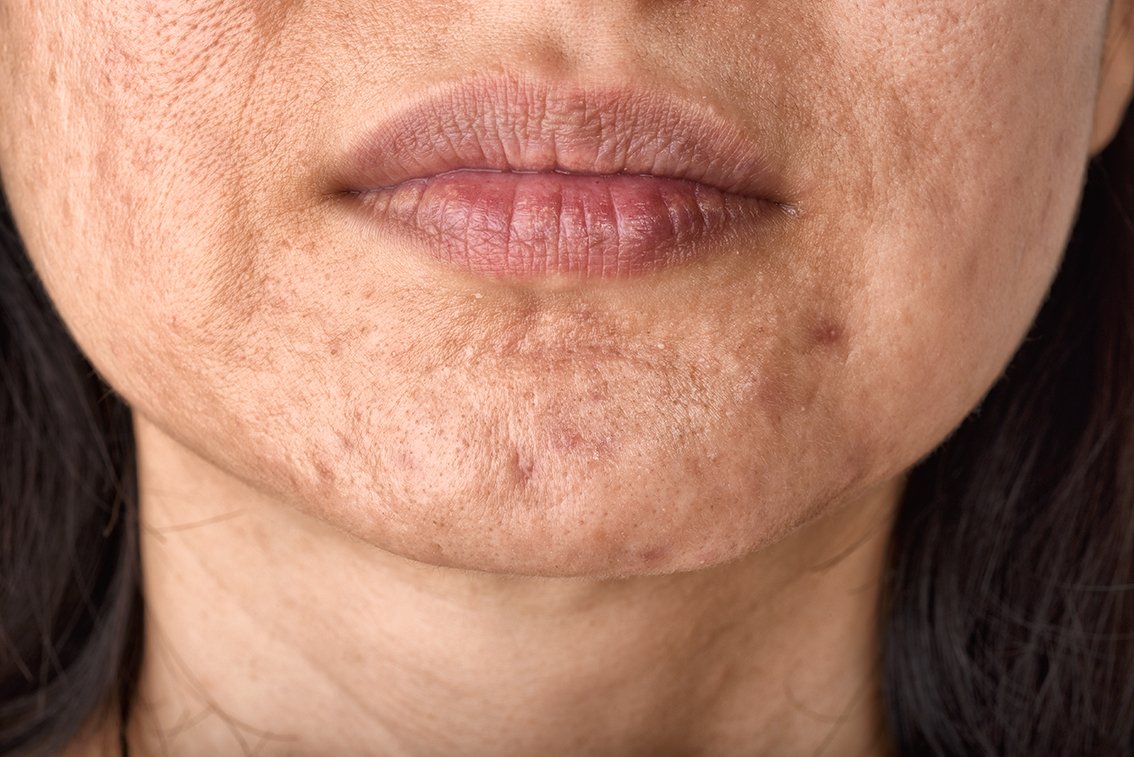
What causes acne scarring?
Acne scarring occurs when inflammation from acne damages the deeper layers of the skin during the healing process. The risk of scarring increases with:
Severe or persistent inflammatory acne
Nodules or cysts
Delayed or inadequate treatment
Repeated picking or squeezing
Early control of active acne is the most effective way to reduce the risk of permanent scarring.
Types of acne scars
Not all acne scars are the same. Accurate classification is essential because different scar types respond to different treatments.
Common acne scar types include:
Ice-pick scars - narrow, deep scars
Boxcar scars - wider scars with sharp edges
Rolling scars - broad depressions caused by tethering of the skin
Post-acne marks - red or brown marks (not true scars) that may fade over time
Keloid or hypertrophic scars – raised, thickened scars
A thorough in-person assessment is required to determine which type (or combination) is present.
Why specialist assessment matters
Acne scarring treatment is rarely “one treatment fits all”. Results depend on:
Scar type and depth
Skin type and pigmentation risk
Ongoing or previous acne activity
Individual healing response
At Your Dermatologist, the priority is to:
Ensure active acne is well controlled
Accurately identify scar type/s
Select treatments with a favourable risk–benefit profile
Set realistic expectations regarding improvement, not perfection
Treatment of post-acne marks
Redness or pigmentation following acne (which is not true scarring) may be managed with:
Time and skin-care optimisation
Targeted treatments once active acne is controlled
Acne scarring treatment options
Treatment plans are individualised and may involve a combination of approaches over time. Options may include:
Procedural treatments
Depending on scar type and skin characteristics, treatment may include:
Techniques to release tethered scars
Treatments to stimulate collagen remodelling
Targeted resurfacing approaches, e.g, fractional CO₂ laser
Multiple sessions are often required, with gradual improvement over months.
Treatment of post-acne marks
Redness or pigmentation following acne (which is not true scarring) may be managed with:
Time and skin-care optimisation
Targeted treatments once active acne is controlled
What results can be expected?
Acne scarring treatment aims to improve skin texture and appearance, not to completely erase scars. Improvement is typically:
Gradual
Incremental
Achieved over a series of treatments
A clear discussion of expected outcomes, downtime and risks is an important part of the consultation process.
What to expect at your consultation
Your acne scarring consultation will include:
Assessment of acne history and current skin activity
Identification of scar types and distribution
Discussion of suitable treatment options
A personalised, stepwise treatment plan
Honest discussion of expected improvement and timeframes

Acne scarring dermatologist in Brisbane
If acne scarring is affecting your confidence or wellbeing, specialist assessment can help clarify which treatments are most appropriate for your skin.
At Your Dermatologist, acne scarring care is evidence-based, measured and focused on long-term outcomes - not quick fixes.