
Skin Cancer & Melanoma Surgery in Brisbane
Specialist Dermatologist Assessment and Surgical Management
Skin cancer is the most common cancer in Australia. Early detection and appropriate surgical management are key to achieving the best outcomes while preserving function and appearance.
At Your Dermatologist, skin cancer and melanoma care is provided with a medical, evidence-based and measured approach, including diagnosis, surgical excision and reconstruction where appropriate, and clear referral pathways when additional treatment is required.
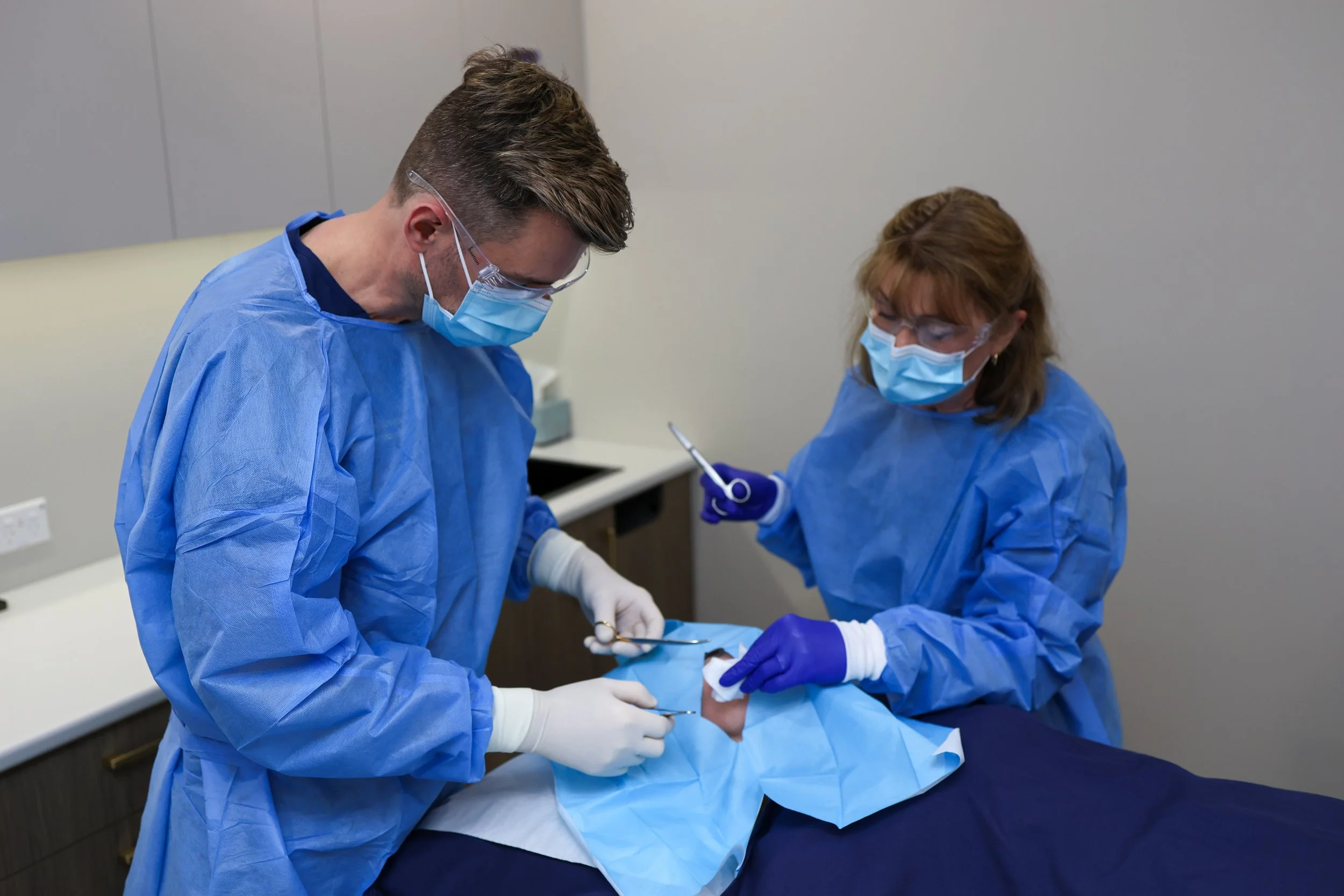
Types of skin cancer assessed and treated
Skin cancers commonly assessed include:
Basal cell carcinoma (BCC)
Squamous cell carcinoma (SCC)
Melanoma and melanoma in situ
Pre-cancerous lesions such as actinic keratoses
Accurate diagnosis and appropriate surgical margins are essential components of skin cancer management.
Skin cancer and melanoma assessment
Assessment includes:
Full skin examination where appropriate
Dermatoscopic evaluation of lesions
Skin biopsy to confirm diagnosis when required
Discussion of diagnosis, treatment options and timing
Management decisions are guided by tumour type, size, location, histological features and individual patient factors.
Surgical procedures provided
At Your Dermatologist, surgical management may include:
Primary excision
Removal of skin cancers with appropriate margins, performed under local anaesthetic, with the aim of complete tumour clearance.
Wide local excision
For melanoma and selected high-risk skin cancers, wider excision margins may be required following initial diagnosis, in line with current clinical guidelines.
Flap repairs
Where direct closure is not suitable, local flap reconstruction may be performed to:
Close surgical defects
Preserve function
Optimise wound healing in anatomically sensitive areas
Flap selection is based on defect size, location, skin tension lines and individual patient factors.
Full-thickness skin grafts
Where direct closure is not appropriate, full-thickness skin grafts may be used to reconstruct surgical defects, particularly in functionally or cosmetically sensitive areas.
Surgical planning focuses on oncological safety, wound healing and preservation of function, with cosmetic considerations addressed appropriately.
After surgery and follow-up
Post-operative care includes:
Wound care instructions and review
Discussion of pathology results
Ongoing skin surveillance where appropriate
Coordination of care with your GP or other specialists
For melanoma or higher-risk skin cancers, follow-up schedules are tailored to individual risk.
Why specialist dermatology care matters
Specialist dermatology involvement in skin cancer care offers:
Expertise in diagnosis and surgical planning
Familiarity with complex or high-risk lesions
Experience with reconstruction in delicate anatomical areas
Integration of medical and surgical skin care
At Your Dermatologist, care is diagnosis-driven, guideline-based and patient-centred, without unnecessary intervention.
What to expect at your consultation
Your consultation will include:
Assessment of the lesion(s) of concern
Explanation of diagnosis and treatment options
Discussion of surgical approach and expected healing
Clear information about pathology, margins and follow-up
Referral planning where additional care is required

Skin cancer and melanoma surgery with a dermatologist in Brisbane
If you have a suspicious skin lesion, a confirmed skin cancer, or a melanoma requiring surgical management, specialist dermatology assessment can help ensure appropriate treatment and follow-up.
At Your Dermatologist, skin cancer and melanoma surgery is evidence-based, transparent and focused on safe, effective outcomes with clear communication and appropriate referral when needed.