
Brown Spots
Expert Assessment and Treatment of Brown Spots.
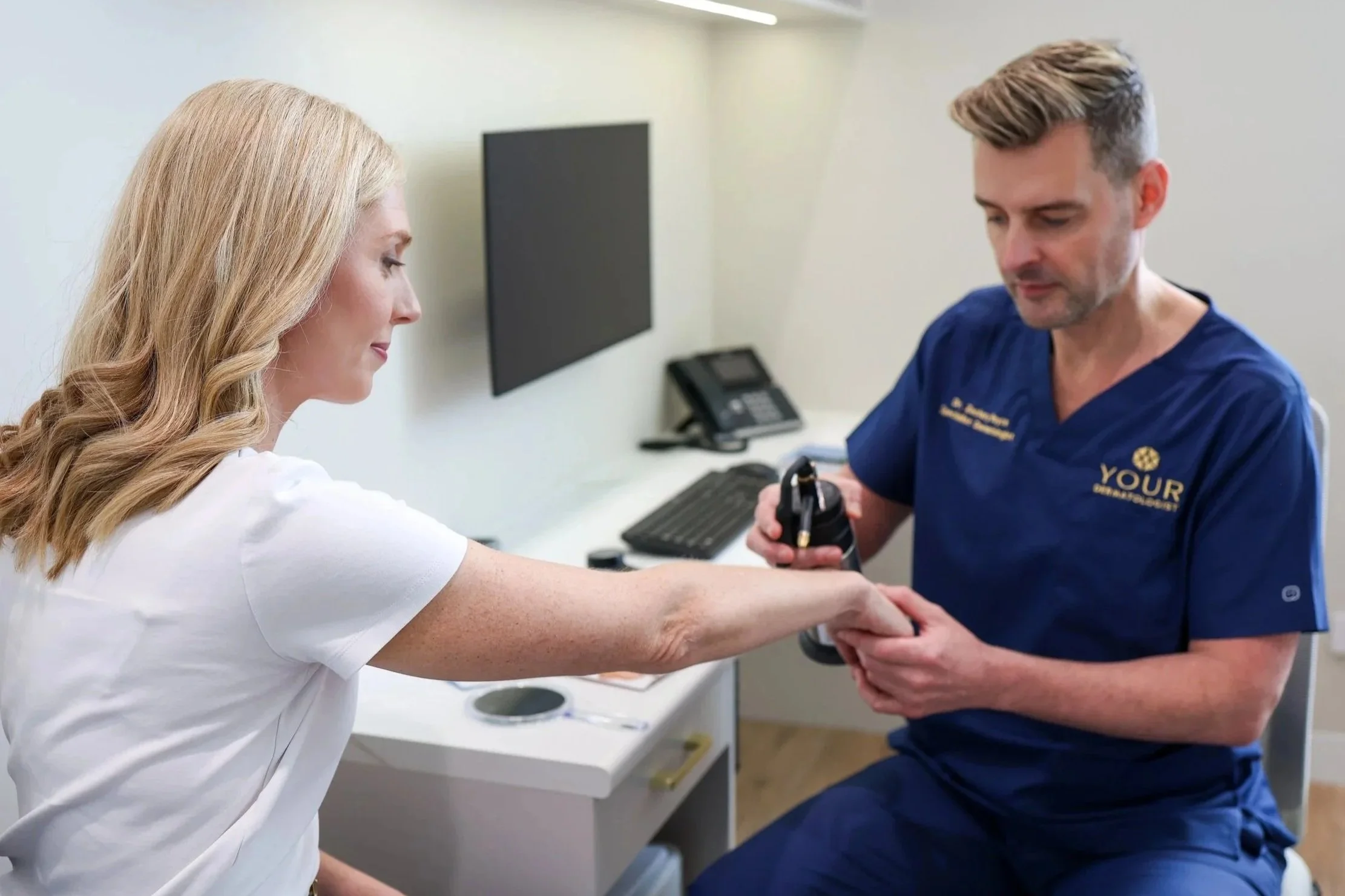
Brown spots on the skin are a common concern, particularly in Queensland where sun exposure is significant. They can appear on the face, hands, chest, shoulders and other sun-exposed areas, and may vary considerably in their appearance, cause and clinical significance.
At Your Dermatologist, all skin concerns, including brown spots, are assessed by a specialist dermatologist. A thorough clinical evaluation, sometimes including dermoscopy, allows for an accurate diagnosis and a personalised management plan.
Common Types of Brown Spots
A dermatologist can determine the exact type and recommend appropriate management. Common types include:
Age / Sun Spots (Lentigines) Flat, tan to dark brown spots that appear on sun-exposed areas such as the face, hands, and shoulders.
Freckles Small, light brown spots with a genetic basis, most common in fair skin.
Seborrhoeic Keratosis Harmless, raised, and often crusty growths with a distinctive "stuck-on" appearance.
Melasma Symmetrical brown patches typically caused by hormonal changes, such as pregnancy or hormonal contraception, and frequently exacerbated by sun exposure.
Important: Any brown spot that has changed in size, shape, or colour; that bleeds; or that looks different from others on your skin should be assessed by a dermatologist promptly. Early detection of skin cancer significantly improves outcomes.
When to Seek Assessment
Consider booking a specialist consultation if you have brown spots that:
Are new, changing, or growing
Have irregular borders or multiple colours
Bleed, itch, or crust
Cause you cosmetic concern or distress
Look different to other spots on your skin
Assessment & Diagnosis
Accurate identification of a brown spot is the foundation of effective management. At Your Dermatologist, our specialist dermatologists use clinical examination and dermoscopy — a non-invasive technique using a handheld instrument that magnifies and illuminates the skin — to assess pigmented lesions with precision.
Where there is any clinical uncertainty, a biopsy may be recommended to obtain a definitive histological diagnosis.
Treatment options may include:
Laser therapy — Targeted laser treatments, including the Derma V platform, can effectively address solar lentigines and other pigmented lesions. Options include specific wavelengths that selectively target melanin in the skin.
Topical treatments — Prescription-strength creams containing agents such as hydroquinone may be recommended for conditions such as melasma or post-inflammatory hyperpigmentation.
Chemical peels — Medical-grade peels can improve the appearance of superficial pigmentation and uneven skin tone.
Cryotherapy — A targeted application of liquid nitrogen may be appropriate for certain benign lesions such as seborrhoeic keratoses or solar lentigines.
Sun protection advice — Broad-spectrum SPF50+ sunscreen, protective clothing and sun avoidance are essential to preventing new spots and maintaining treatment results. This is particularly relevant in the Queensland climate.
Surgical or biopsy procedures — Where a lesion requires histological assessment or excision, this can be performed at Your Dermatologist.
Frequently Asked Questions
Are brown spots dangerous?
Most brown spots are benign. However, some pigmented lesions, including early melanoma or lentigo maligna, can appear as brown spots and require prompt assessment. A specialist dermatologist can accurately differentiate between harmless and potentially significant lesions.
Can brown spots be permanently removed?
Many brown spots can be significantly reduced or eliminated with appropriate treatment. However, new spots may develop with ongoing sun exposure, and some conditions such as melasma tend to recur. Your dermatologist will advise on realistic outcomes and long-term skin care strategies.
How many treatments are typically needed?
This varies depending on the type and severity of the pigmentation, the treatment selected, and your individual skin response. Your dermatologist will discuss expected treatment timelines at your consultation and develop a plan tailored to your goals.
What can I do to prevent brown spots from worsening?
Daily use of a broad-spectrum SPF50+ sunscreen, along with sun-protective clothing and seeking shade during peak UV hours, is the most effective way to slow the development of new pigmentation and protect treatment results.
What does a consultation involve?
During your consultation, your dermatologist will take a thorough history, examine the area of concern, and may use dermoscopy to evaluate any lesions in detail. You will receive a clear explanation of the diagnosis and all available management options.
Brown Spots Treatment in Brisbane
A consultation with one of our dermatologists is the first step to understanding your brown spots and exploring the most appropriate treatment options for your skin.
Please note that while a referral is not required to make an appointment, a higher Medicare rebate will apply if you attend with a valid GP referral. Additional fees may apply for any biopsies, procedures or treatments performed during your visit.