
Skin Biopsy and Skin Surgery in Brisbane
Specialist Dermatology Procedures and Skin Cancer Surgery
Skin biopsies and skin surgery are important diagnostic and treatment procedures used in the assessment and management of a wide range of skin conditions, including skin cancer.
At Your Dermatologist, procedures are performed by a specialist dermatologist, with an emphasis on accurate diagnosis, appropriate surgical technique, and careful follow-up.
Skin biopsy
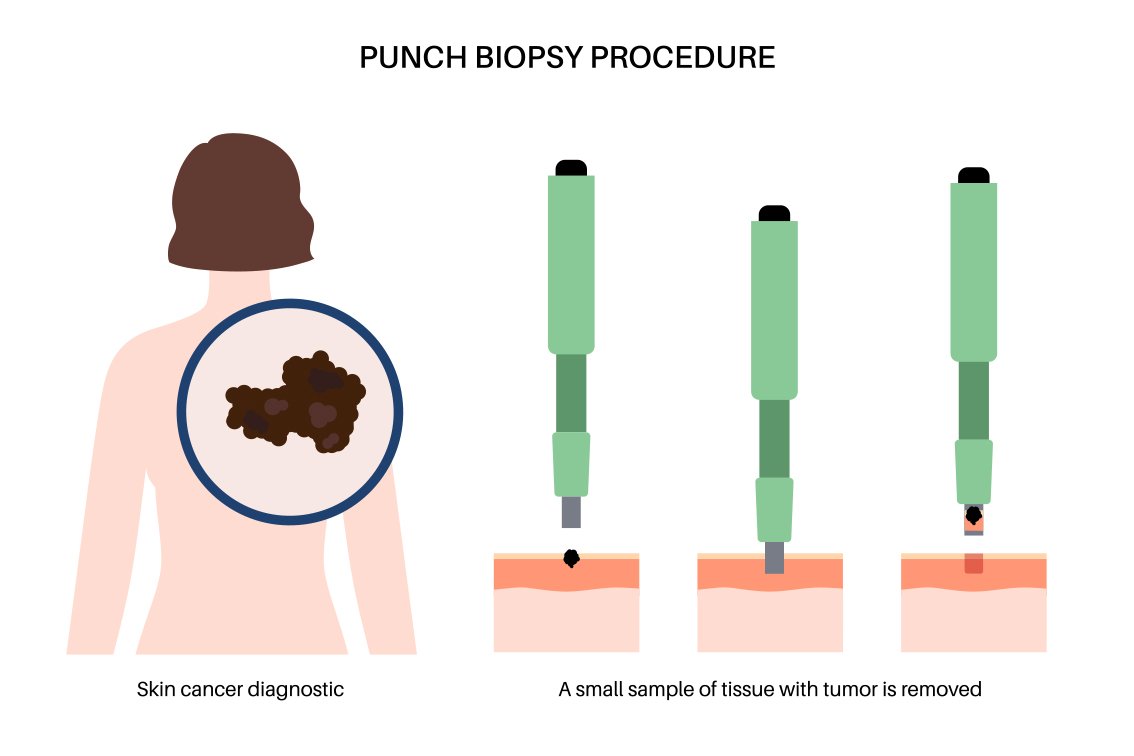
A skin biopsy involves removing a small sample of skin so it can be examined under a microscope. Biopsies are commonly used to:
Diagnose inflammatory or autoimmune skin conditions
Confirm or exclude skin cancer
Clarify uncertain or changing skin lesions
Biopsy selection and technique depend on the type, size and location of the lesion being assessed.
Types of skin biopsy
Punch biopsy
A punch biopsy uses a small circular instrument to remove a full-thickness sample of skin. It is commonly used for:
Rashes or inflammatory skin conditions
Some pigmented or suspicious lesions
Lesions requiring deeper tissue assessment
Stitches are often required, and the sample is sent for formal pathology assessment by a specialist dermatopathologist.
Shave biopsy
A shave biopsy removes a superficial portion of the skin lesion and may be suitable for:
Raised or superficial lesions
Certain suspected non-melanoma skin cancers
Some pigmented skin lesions
Diagnostic sampling where full-thickness removal is not required
The most appropriate biopsy technique is determined after clinical assessment.
Skin cancer surgery
Skin surgery is commonly required for the treatment of skin cancers such as:
Basal cell carcinoma
Squamous cell carcinoma
Melanoma
Surgical management aims to completely remove the cancer, while preserving function and achieving the best possible cosmetic outcome.
Excision of skin cancers
Skin cancer excision involves removing the lesion with an appropriate margin of normal skin. The excised tissue is sent for histopathological examination to confirm:
Complete removal
Cancer type
Margins and risk features
Further treatment or follow-up is guided by pathology results and clinical findings.
Reconstructive techniques
In some cases, direct closure is not possible or optimal following excision. Reconstructive options may include:
Skin flaps
A skin flap involves moving nearby skin to close a surgical defect while maintaining its blood supply. Flaps may be used when:
The defect is large
The area requires careful preservation of contour or function
Cosmetic outcome is an important consideration
Full thickness skin grafts
A full thickness skin graft involves transferring skin from a donor site to the surgical area. This may be considered when:
Local tissue is insufficient for closure
The surgical site requires specialised reconstruction
The choice of reconstructive technique depends on the location, size of the defect, skin characteristics and individual patient factors.
What to expect from skin surgery
Your consultation and procedure planning will include:
Careful assessment of the lesion or diagnosis
Discussion of appropriate surgical options, and other non-surgical options if appropriate
Explanation of expected healing, scarring and follow-up
Review of pathology results once available
Ongoing surveillance where indicated
All procedures are recommended based on clinical need and individual assessment.
Specialist dermatology surgery in Brisbane
If you require a skin biopsy or skin cancer surgery, specialist dermatology care ensures that diagnosis, treatment and reconstruction are approached thoughtfully and safely.
At Your Dermatologist, skin procedures are evidence-based, appropriately conservative and focused on long-term skin health - not unnecessary intervention.