
Allergy Patch Testing in Brisbane
Specialist Assessment of Allergic Contact Dermatitis
Allergy patch testing is a specialised diagnostic procedure used to identify allergic contact dermatitis - a delayed allergic reaction caused by contact with specific substances in everyday products.
At Your Dermatologist, patch testing is performed as part of a structured diagnostic process, helping identify relevant allergens and guide long-term management of chronic or recurrent dermatitis.
What is allergic contact dermatitis?
Allergic contact dermatitis occurs when the immune system reacts to a substance that comes into contact with the skin. Symptoms may include:
Persistent or recurrent eczema
Itch, redness or scaling
Blistering or cracking
Dermatitis affecting the face, hands, eyelids, scalp, or body
Common triggers include ingredients found in:
Cosmetics and skincare products
Fragrances and preservatives
Hair dyes
Metals (such as nickel)
Rubber, adhesives and topical medications
Allergic contact dermatitis is a delayed hypersensitivity reaction, meaning symptoms often appear days after exposure, making identification of the trigger difficult without formal testing.
What is patch testing?
Patch testing is a medical diagnostic test, not a blood test or prick test. It involves:
A thorough history and examination to determine the relevant panel of allergen to test
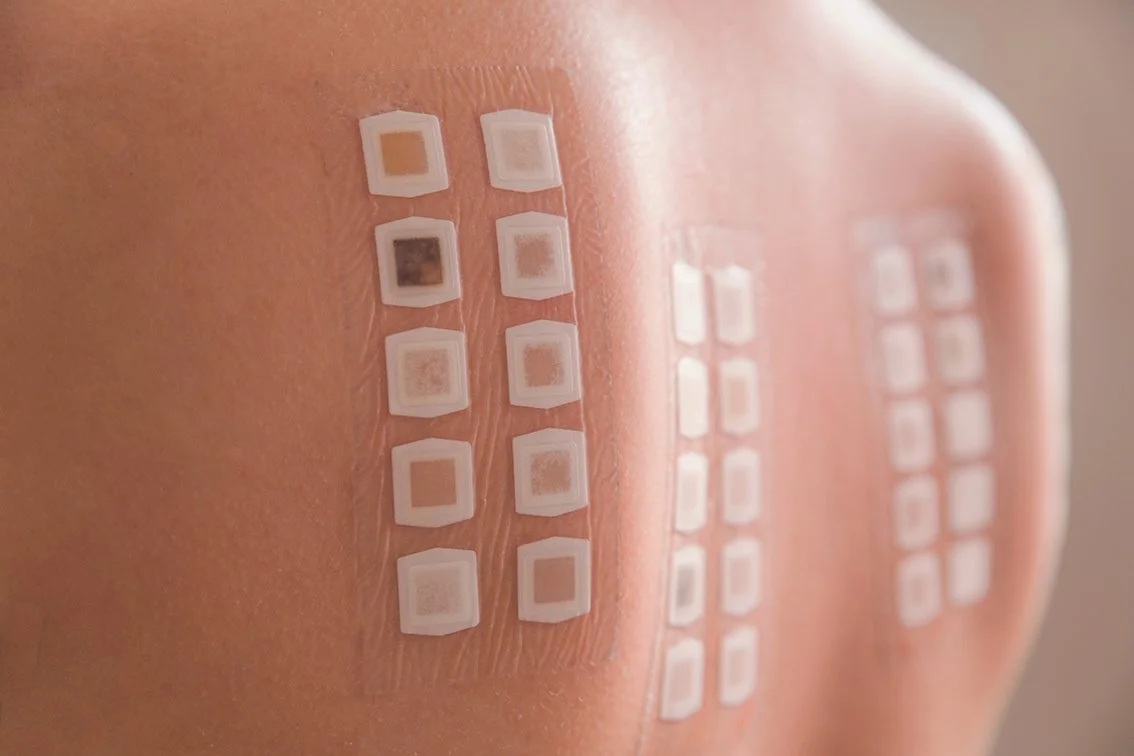
Applying small amounts of common allergens to the skin using adhesive patches, usually on the back
Leaving the patches in place for a set period (usually applied Monday, removed and reviewed Wednesday, and reviewed again on Friday)
Assessing the skin response over multiple visits
Patch testing helps determine whether a specific substance is causing an allergic reaction on contact with the skin.
Who may benefit from patch testing?
Patch testing may be considered if you have:
Chronic or recurrent eczema that does not respond as expected to treatment
Dermatitis affecting the face, eyelids or hands
Occupational or work-related dermatitis
Suspected allergy to cosmetics, fragrances, hair products or topical treatments
Dermatitis with an unclear or ongoing trigger
Not all rashes are allergic in nature, which is why specialist assessment is important before proceeding with testing.
What patch testing can (and cannot) diagnose:
Patch testing can help identify:
Allergic contact dermatitis
Relevant allergens contributing to ongoing eczema
Patch testing does not diagnose:
Food allergies
Immediate allergic reactions (such as hives or anaphylaxis)
Asthma or hay fever
Clear explanation of what testing can and cannot assess is an important part of the consultation.
What to expect during patch testing
Patch testing usually involves multiple appointments over one week, including:
Initial consultation and allergen selection
Ordering of specific panel of patches
Application of patches
Review and interpretation of results
Education on allergen avoidance and ongoing management
Results must be interpreted carefully, as a positive test is only clinically meaningful if it correlates with your symptoms and exposure history.
A negative test, essentially rules out the allergens tested as the cause.
After patch testing
Following testing, you will receive:
Explanation of relevant allergens
Advice on avoidance strategies
Guidance on suitable products and alternatives
A management plan tailored to your skin condition
Avoidance of confirmed allergens is often the most effective long-term treatment.

Specialist patch testing in Brisbane
If you have persistent or unexplained eczema, specialist patch testing can help clarify whether allergic contact dermatitis is contributing to your skin condition.
At Your Dermatologist, patch testing is performed thoughtfully and selectively, with an emphasis on accurate diagnosis, patient education, and long-term skin health — not unnecessary testing.