
Birthmarks
Specialist Assessment and Management of Congenital and Acquired Birthmarks
Birthmarks are areas of altered skin colour, texture or growth that are present at birth or develop in early life. Many birthmarks are harmless and require no treatment, while others may benefit from specialist assessment to clarify diagnosis, monitor change, or guide management.
At Your Dermatologist, birthmarks are assessed thoughtfully, with a focus on accurate diagnosis, reassurance where appropriate, and evidence-based care.
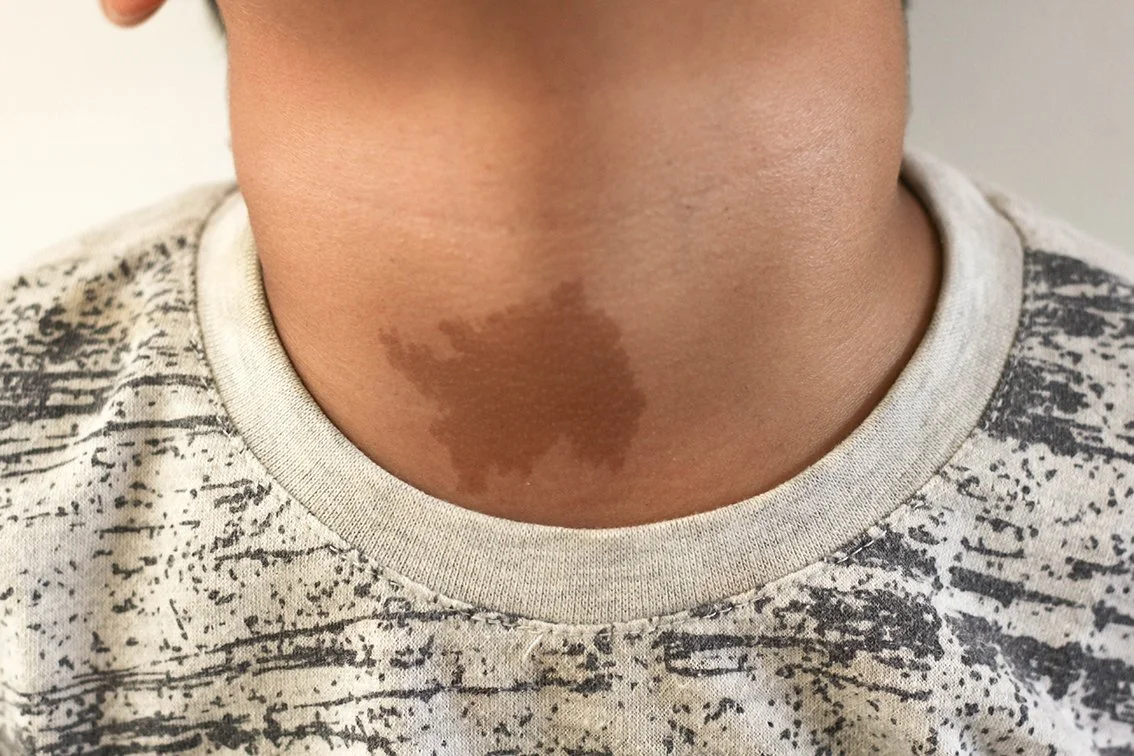
What are birthmarks?
Birthmarks are broadly classified into two main groups:
Vascular birthmarks - caused by abnormal blood vessels (e.g. capillary or venous lesions)
Pigmented birthmarks - caused by collections of pigment-producing cells (melanocytes)
Some birthmarks are present at birth, while others become noticeable in infancy or early childhood.
Most birthmarks are benign, but accurate classification is important to determine whether monitoring or treatment is required.
Common types of birthmarks
Vascular birthmarks
These may include:
Salmon patches (naevus simplex)
Port wine stains
Infantile haemangiomas
Vascular birthmarks vary in appearance and behaviour. Some fade with time, while others persist and may thicken or darken over years.
Pigmented birthmarks
These may include:
Café-au-lait macules
Congenital melanocytic naevi (moles present at birth)
Dermal melanocytosis (e.g. Mongolian spots)
Pigmented birthmarks differ in size, colour and location, and some may require ongoing monitoring depending on their characteristics.
Why specialist assessment is important
While many birthmarks are harmless, specialist assessment may be recommended to:
Confirm the type of birthmark
Distinguish benign lesions from those requiring monitoring
Assess the risk of complications or long-term change
Provide guidance on expected natural history
In children, assessment also considers growth, development and long-term skin health.
Monitoring and management
Observation and reassurance
For many birthmarks, the most appropriate approach is:
Education about the lesion
Reassurance
Periodic monitoring for change
Treatment options (when appropriate)
Treatment is not always required and is considered only after individual assessment. Depending on the type of birthmark, management may involve:
Ongoing observation
Referral for multidisciplinary input where indicated
Consideration of procedural treatment in selected cases
The benefits, limitations and risks of any intervention are discussed carefully before proceeding.
Birthmarks in children and adults
Birthmarks are commonly assessed in infancy and childhood, but adults may also seek review for:
Long-standing birthmarks that have changed
Pigmented lesions requiring clarification
Cosmetic or functional concerns
Assessment is tailored to age, lesion type and individual circumstances.
What to expect at your consultation
Your consultation will include:
Detailed history (including onset and change over time)
Clinical examination and dermoscopic assessment where appropriate
Discussion of diagnosis and natural history
Advice regarding monitoring or treatment options
Clear guidance on when review is recommended

Specialist birthmark assessment in Brisbane
If you or your child has a birthmark and you would like clarity, reassurance, or advice on monitoring or management, specialist assessment can help guide appropriate care.
At Your Dermatologist, birthmark assessment is measured, evidence-based and focused on long-term skin health - not unnecessary treatment.